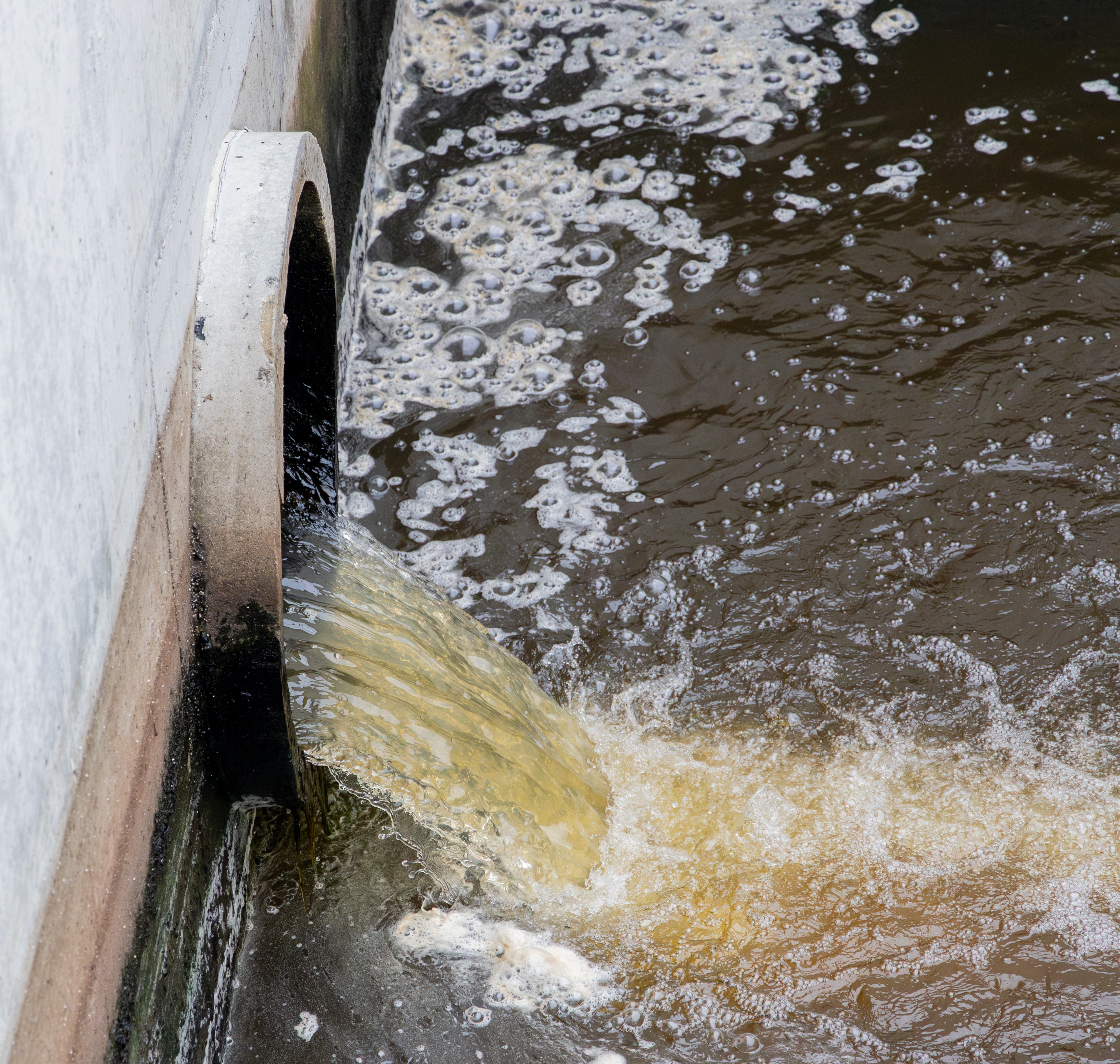
What is trade waste?
Trade waste is the liquid waste produced by commercial, industrial, and business activities that enters the wastewater system. Unlike normal household wastewater, it can contain substances such as chemicals, fats, or by-products that may harm pipes, treatment systems, or the environment if not properly managed. Trade waste may also include domestic sewage generated at the premises.
Why it matters
Poor trade waste management can lead to:
- Sewer blockages or overflows
- Damage to the wastewater network
- Health risks for workers and the public
- Harm to the environment
Trade waste is not always hazardous, but it can cause significant issues if discharged without appropriate treatment.
Who needs a consent?
Any business that discharges, or intends to discharge, trade waste into the public wastewater network must apply for a Trade Waste Consent. No plumbing or drainage work connected to the wastewater system should begin without approval.
All businesses are assessed based on the volume and composition of their wastewater.
Following assessment, your trade waste discharge may be classified as one of the following:
- Waiver
Businesses with very low-risk discharges may be granted a waiver from trade waste charges where the discharge is considered unlikely to impact the wastewater network or treatment process. - Permitted
Low-risk discharges that meet standard requirements and can be managed with minimal controls. - Conditional
Discharges that require specific conditions, such as pre-treatment (e.g. grease traps) or monitoring, to ensure they do not harm the system. - Prohibited
Discharges that are not allowed because they pose a significant risk to the wastewater network, treatment processes, public health, or the environment.
In some cases, additional information may be required, such as wastewater sampling or laboratory analysis, to determine the appropriate classification.
Who typically needs a Trade Waste Consent
Examples of businesses that may require a Trade Waste Consent include:
- Restaurants and food manufacturers
- Hairdressers and dog groomers
- Laundromats
- Meat processing plants
- Metal finishers and chemical plants
- Petrol stations and car washes
- Hospitals and healthcare facilities
Selwyn Water must manage trade waste in line with Selwyn District Council's Trade Waste Bylaw 2021 which sets out rules and controls to prevent harmful discharges into the wastewater system.
How we support you
We work with businesses to:
- Understand their level of risk
- Explain their obligations under the Trade Waste Bylaw
- Identify practical and cost-effective ways to comply
Apply for a Trade Waste Consent
If your business is discharging without a consent or plans to discharge trade waste into Selwyn Water’s public wastewater system, you’ll need to follow the steps below.
1. Get in touch with us
We recommend contacting us as early as possible, especially if you’re planning a new build, fit-out, or change in business activity.
Email our team at tradewaste@selwynwater.co.nz to discuss your situation or to arrange a pre-application meeting.
2. Prepare and submit your application
Complete the trade waste assessment or consent application form below, provide all required supporting information and submit it to us.
Application for Trade Waste assessment or consent (including renewal)
If you do not already have one, you will be prompted to sign-up for a MyWater account before completing the online form. You do not need to be a Selwyn Water customer or be verified to access our online forms.
Depending on your business, you may be asked to include:
- Details of your processes and water use
- Site and plumbing plans
- Information on any pre-treatment systems
- Wastewater test results (if required)
3. Application review
Once we’ve received your application and payment, we will:
- Acknowledge receipt within 10 working days
- Assess your discharge against the Trade Waste Bylaw 2021
- Determine whether your discharge is permitted, conditional, or prohibited
- We may contact you if further information is needed.
4. Consent decision
If approved, your Trade Waste Consent will outline:
- What you can discharge
- Any treatment or system requirements
- Monitoring, sampling, or maintenance expectations
- Applicable charges
Fees and charges
Trade waste charges vary depending on your discharge type and volume using the calculation set out in the Trade Waste Bylaw 2021.
Please also see our Fees and Charges Schedule for a full list of other trade waste fees.
Fees may apply for:
- Trade Waste discharge consent application (required for most non-residential premises with conditional discharges)
- Temporary Trade Waste discharge consent
- Uniform annual charge (permitted discharges)
- Trade Waste re-inspection
- Disconnection – at estimated cost
- Uniform annual charge (conditional discharges) – calculated per discharge (as per Bylaw)
Please note: A Development Contribution fee may also apply under Selwyn Water’s Development Contribution Policy.
Examples of trade waste charges for different consent and business types
Trade waste charges are based on the volume of wastewater discharged to the public wastewater network (calculated from water usage) and the characteristics of that discharge, if applicable.
Permitted trade waste charges (volume based)
Your standard wastewater charges already cover up to 1 Household Unit Equivalent (HUE), which represents approximately 545 litres per day. If your business discharges more than this amount, trade waste charges apply only to the volume above 545 litres per day.
- Example: A business that uses and discharges 800 litres of wastewater per day would only pay trade waste charges on the additional 255 litres per day, as the first 545 litres per day is already covered by standard wastewater charges.
Conditional trade waste charges (volume and composition)
Conditional trade waste customers are charged in the same way as permitted trade waste customers for wastewater volumes above 1 HUE (approximately 545 litres per day).
However, additional charges may also apply based on the composition or characteristics of the wastewater, such as higher concentrations of fats, oils, grease, suspended solids, or other contaminants that place additional demands on the wastewater network and treatment system.
Examples
The examples below illustrate how charges may vary between different consent types and business activities and should be treated as indicative only. Actual charges will depend on the nature of the discharge, wastewater volumes, consent conditions, and the applicable fees and charges.
1 m3 = 1,000 litres
Business type | Consent type | Average wastewater discharged (m3/day) | Example annual charge | Details | |
|---|---|---|---|---|---|
| Small café | Permitted | 0.86 | $479 | Wastewater volumes from food preparation and cleaning activities | |
| Home hairdresser | Permitted | 0.60 | $84 | Small-scale operation and discharge | |
| Laundromat | Permitted | 2.48 | $2,941 | Multiple washing machines and driers generate higher wastewater volumes | |
| Dog groomer | Permitted | 0.62 | $114 | Small -scale operation and discharge | |
| Large sized pub and restaurant | Conditional | 6.64 | $11,149 | Large hospitality venue with higher wastewater discharge. Food and beverage operations require controls such as grease management |