The purpose of this update is to clarify expectations for water and wastewater pipe laying in the district.
Pipe installation
Water and wastewater pipes are to be laid to the industry standard. It is the responsibility of the contractor to ensure the compatibility of the pipe and fittings.
- For elastomeric joints - pipe to pipe - this means that the pipe is to be inserted into the socket to the single witness mark, so that the witness mark remains just visible ensuring the correct insertion depth.
- For elastomeric joints – fitting to fitting or fitting to pipe - the pipe spigot or fitting spigot is to be fully inserted into the fitting socket.
Picture of a pipe with witness mark showing correct pipe embedment.
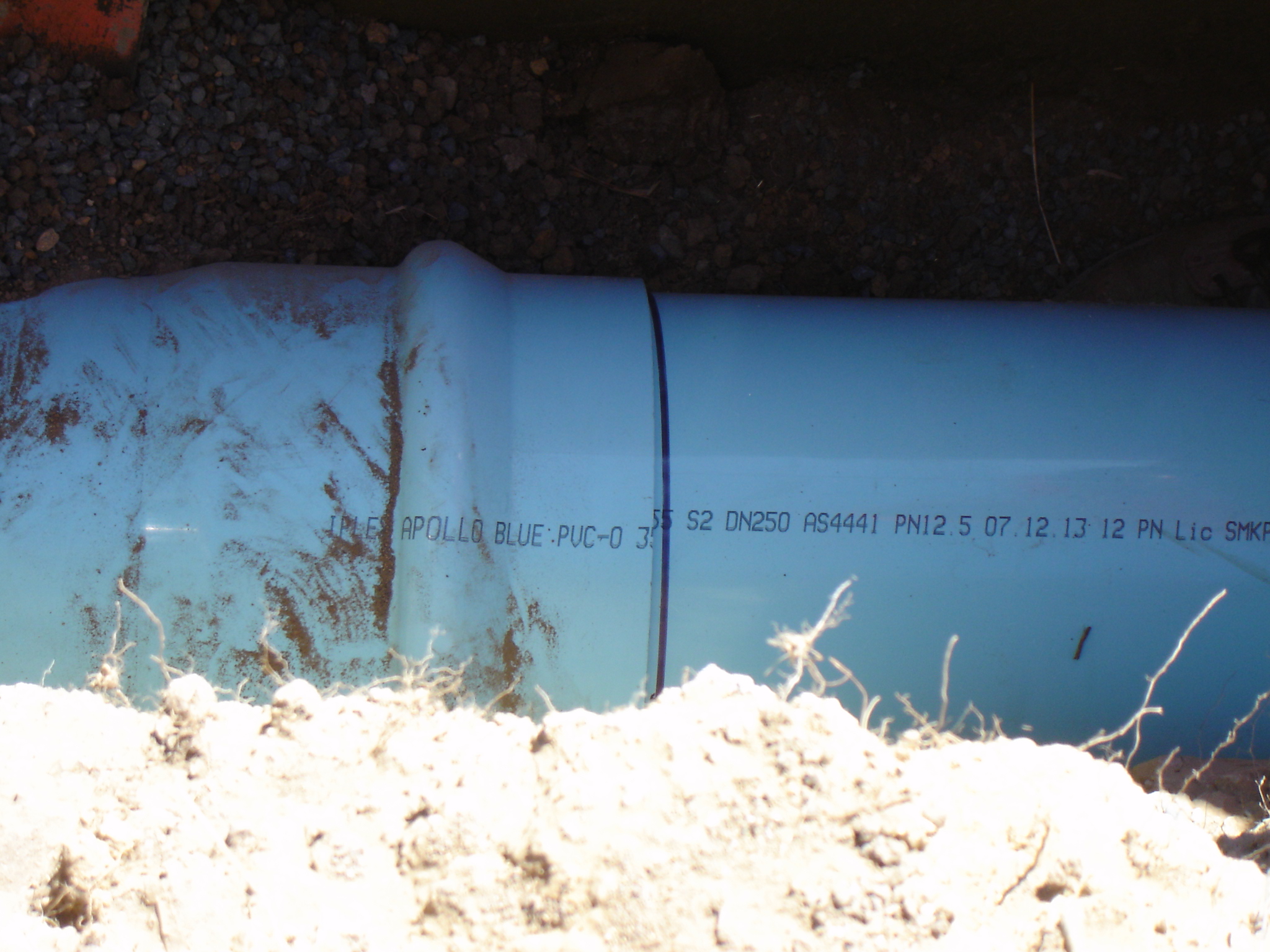
This correct practice is to begin with immediate effect.
It is acknowledged that work in progress will have pipes that have been fully inserted. Please document on as-built plans the pipes that have been fully inserted. There is no intention to refuse vesting of these pipes.
Pipes installed fully inserted after 1 November 2026 will be considered defects.
We recommend good documentation of pipes installed.
Pipe laying and reinstatement
Water and wastewater pipes are to be installed in accordance with the CCC CSS, as described in the Engineering Code of Practice, Section 3, clause 3.6. In practice this means:
- All Nuclear Densometer (ND) testing and results must completed by an IANZ Accredited Laboratory and Tester.
- Bedding and haunching, and every trench backfill lift is ND tested at 10 m centres. Calibrated cleggs may be substituted by agreement with SWL and the Engineer, however every 50 m test must be completed by ND.
- The road subbase AP40 must be completed every 10 m with an ND, i.e. no cleggs are allowed.
- Note requirements to provide MDD test results for materials used.
- Pipes captured by this notice include gravity pipes, pressure mains and submain crossovers in roads, vested pipes in private land, and any mains under commercial vehicle crossings.
This correct practice is to begin with immediate effect with the caveat below.
Development, or stage/s of development currently under construction are exempt of the IANZ Accredited Laboratory requirement. Future development and stages not yet under construction will require IANZ certified testing. It is the Contractor and Engineer’s responsibility to demonstrate and ensure quality control during construction. Quality Assurance records must reflect this.